Ranked universities
0
Annual MS tuition
$
k+
Indian students
0
k+
STEM OPT
1
years
Cyber Success helps Indian students pick Canadian universities, prepare a strong study permit file and plan the PGWP route, with one counsellor from start to finish.
Respected Universities
McGill, Toronto, UBC and Alberta rank in the QS 2027 top 100, with strong research in AI and engineering.
Post-Graduation Work Permit
Eligible graduates can work in Canada for up to 3 years on a PGWP after their programme.
Co-op Learning
Many programmes include paid co-op terms, so you graduate with Canadian work experience.
Pathway to PR
Canadian study and work experience can strengthen a future Express Entry profile.
Review the academic, language, test and funding rules before applying.
Academic requirements
English language
Tests and GRE
Financial requirements
Canadian institutions offer Fall, Winter and Summer intakes. Fall 2027 has the most programmes and scholarships, so begin your plan this year.
Main intake / Fall Intake
Widest choice of university programmes. Most entrance scholarships and co-op seats. Deadlines: November 2026 – March 2027. Classes: September
Secondary intake / Winter Intake
Good backup if you miss Fall deadlines. Popular with colleges and PG diplomas. Fewer master’s options. Apply: June – September
Limited intake / Summer Intake
Offered by selected colleges. Mostly diploma and certificate courses. Smaller classes and less competition. Apply: October – January
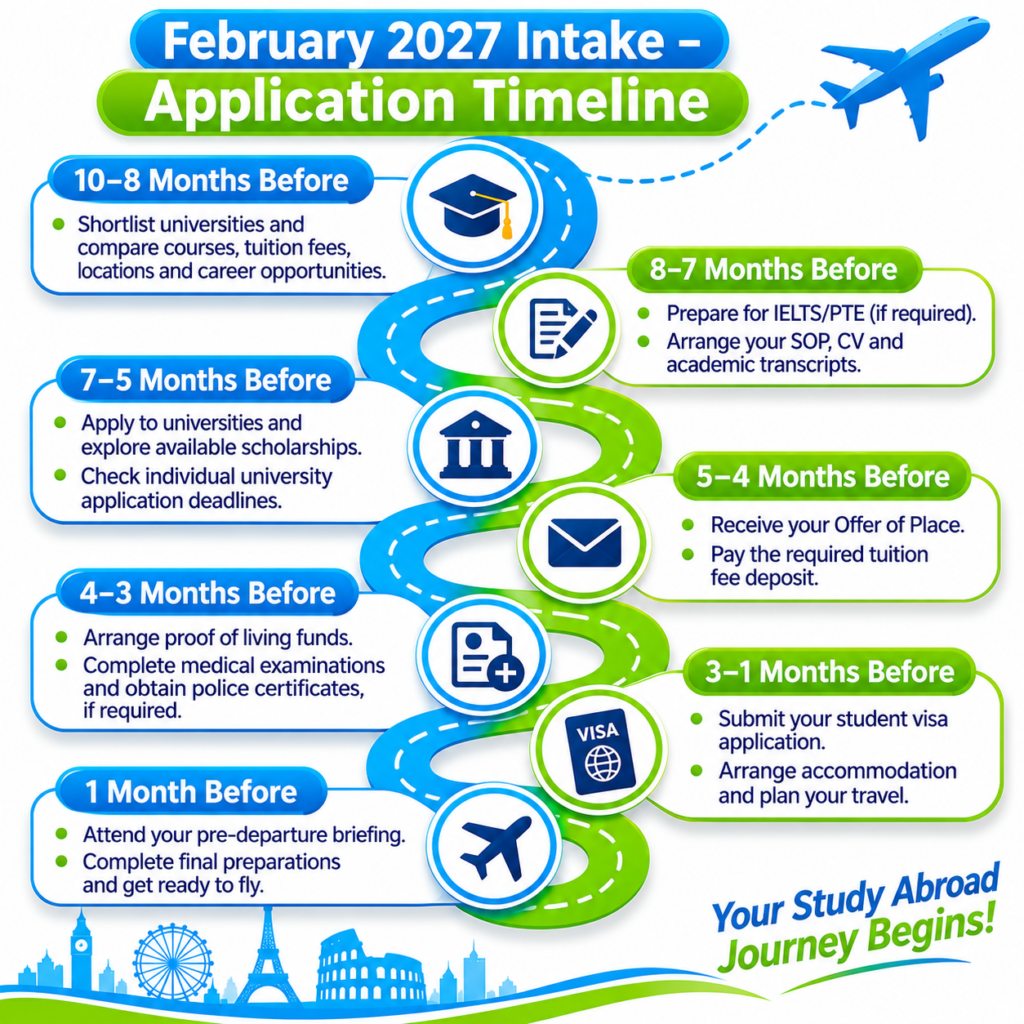
12–10 months before
Shortlist universities. Compare PGWP eligibility, fees, co-op and cities.
10–8 months before
Take IELTS or PTE. Aim for scores that also meet PGWP rules.
8–6 months before
Apply by December–February. SOP, LORs and transcripts ready.
6–4 months before
Receive your offer letter. Pay the deposit and request a PAL if needed.
4–3 months before
Buy your GIC and apply for the study permit with biometrics.
2–1 months before
Book housing, flights and forex. Arrange medical insurance.
1 month before
Fly to Canada. Pre-departure briefing and packing.
Strong picks for all Master Courses.

Popular for AI & Computer Science
QS World Ranking

Popular for Machine Learning
QS World Ranking

Popular for Data Science
QS World Ranking

Popular for AI & Engineering |
QS World Ranking

Popular for Computer Science & Co-op
QS World Ranking

Popular for Business & Analytics |
QS World Ranking

Popular for AI Research |
QS World Ranking

Popular for Engineering & Health
QS World Ranking

Popular for Business Analytics
QS World Ranking
Top choices for Indian students








Your cost depends on the institution, programme, province and city. Rent, groceries, transit and insurance add up.
Canadian universities award entrance scholarships, merit awards and graduate funding packages, and many master’s students earn through teaching or research assistantships.
Indian students can also apply for named awards such as Toronto’s Lester B. Pearson scholarship, and fund the balance through education loans.

Common documents Indian students need when applying to US universities:
The F-1 visa lets you study full time at a SEVP-certified US school. You will typically need:
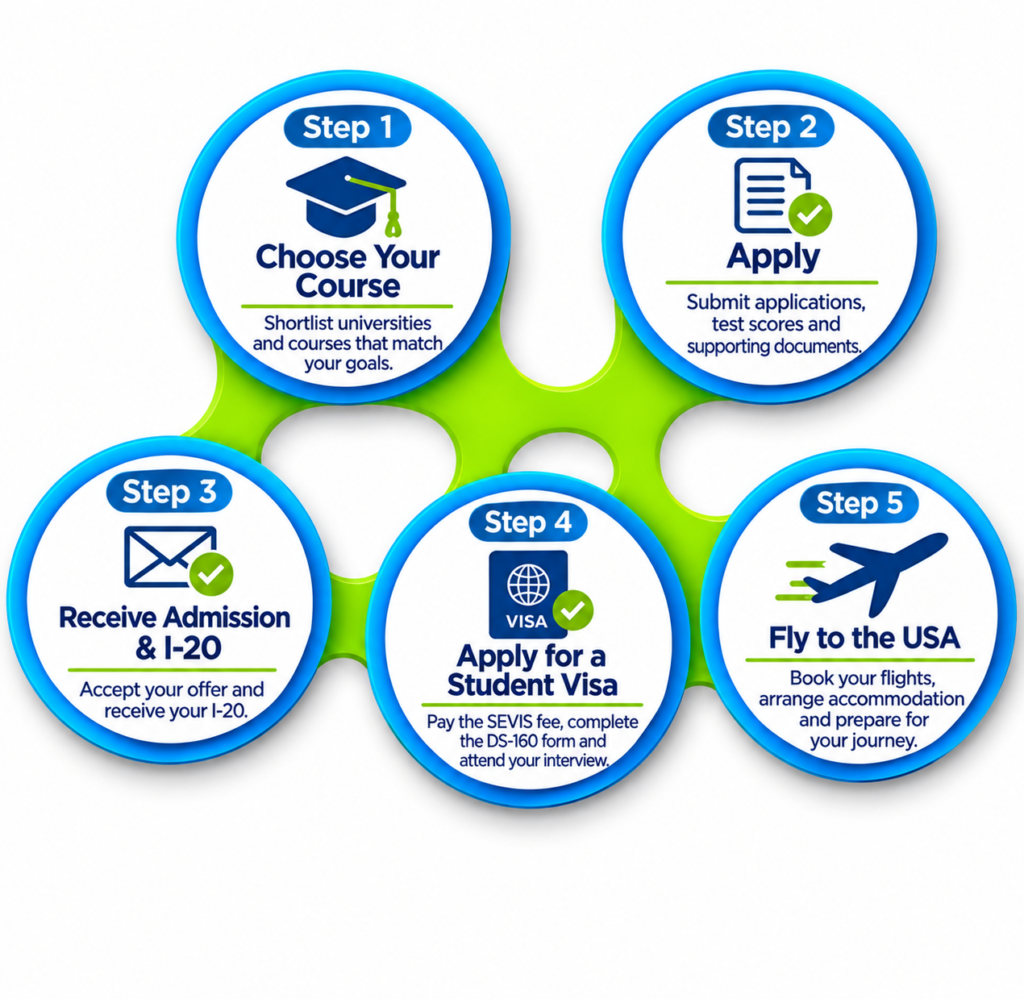
Step 1: Choose course
Shortlist PGWP-eligible programmes that fit your goals and budget.
Step 2: Apply
Submit applications, scores and documents before deadlines.
Step 3: Offer and PAL
Accept your offer, pay the deposit and get a PAL if required.
Step 4: Study permit
Buy a GIC, file your permit and give biometrics.
Step 5: Fly to the USA
Book travel, arrange housing and start classes.
Master’s tuition is usually CAD 20,000 to CAD 55,000 a year. Living costs add about CAD 1,300 to CAD 3,000 a month.
Outside Quebec, show at least CAD 22,895 for living costs plus first-year tuition and travel. Quebec sets its own amount.
A DLI acceptance letter, a PAL where required, proof of funds, a study plan, biometrics, and a medical exam if requested.
From 1 January 2026, master’s and doctoral students at public institutions are exempt. Most college and bachelor’s applicants still need one.
Up to 3 years, based on programme length. Master’s graduates can get up to 3 years, subject to language and programme rules.
Yes. You can work off campus up to 24 hours a week during classes and full time during scheduled breaks.
No. The Student Direct Stream closed in November 2024, so Indian students now apply through the regular study permit process.
Most university deadlines fall between November 2026 and March 2027. Popular programmes close earlier, so apply by January for better odds.
Most Canadian master’s programmes do not need the GRE. Some top CS and MBA programmes may ask for GRE or GMAT.
Toronto, McGill, UBC, Waterloo and Alberta are strong picks. Compare co-op, research labs and fees for your profile.
Canadian education and work experience can help an Express Entry profile, but PR depends on points and draws.
One counsellor handles your shortlist, applications, PAL, GIC, permit file and tech upskilling before you fly.
Pick an agent with transparent fees, real partnerships and realistic advice. Avoid anyone guaranteeing a permit.

Cyber Success, Pune's best IT & Non-IT training institute, is on a mission to provide students with industry-relevant skills. They offer expert-led courses that will help you excel in the tech industry. We offer hands-on training in Software Testing, Java Development, Python, MERN Stack, Data Science, and Data Analytics.