Ranked universities
0
Annual MS tuition
$
k+
Indian students
0
k+
STEM OPT
1
years
Cyber Success helps Indian students choose Irish universities, prepare a strong study visa file and plan the Stamp 1G route, with one counsellor beside you throughout.
Rising Universities
Trinity College Dublin ranks 75th and UCD 100th in QS 2027, with six Irish universities climbing.
Europe’s Tech Hub
Google, Meta, Microsoft and Apple run major European operations from Ireland.
One-Year Master’s
Most taught master’s degrees take 12 months, cutting your total cost.
Stamp 1G Stay-Back
Master’s graduates can stay up to 2 years to find work, with full-time work rights.
Review the academic, English and funding rules before you start.
Academic requirements
English language
Tests and GRE
Financial requirements
Irish universities mainly run a September intake, with a smaller January intake. September 2027 offers the widest choice, so start preparing this year.
Main intake / September Intake
Widest choice of bachelor’s and master’s courses. Most scholarships and GOI-IES awards. Apply: November 2026 – April 2027. Classes: September
Secondary intake / January Intake
Good option if you miss September. Selected master’s and diplomas. Fewer seats and scholarships. Apply: June – October
Limited intake / Summer Intake
Offered by a few institutions. Mostly short courses and diplomas. Useful for upskilling or pathways. Apply: January – March
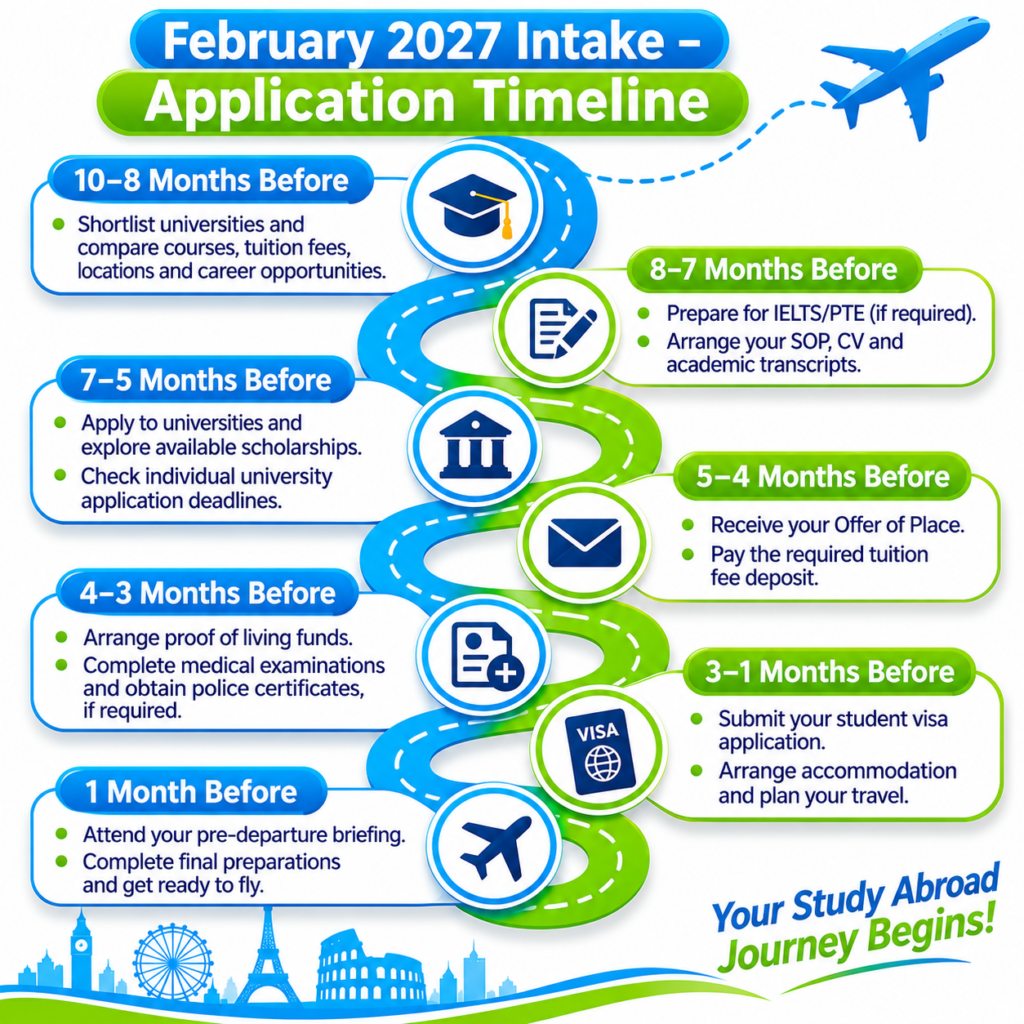
12–10 months before
Shortlist universities. Compare modules, fees, rankings and job links.
10–8 months before
Take IELTS or PTE. Draft your SOP and request LORs.
8–6 months before
Apply to universities. Early files get more scholarship chances.
6–4 months before
Receive offers. Accept one and pay the tuition deposit.
4–3 months before
Arrange funds, pay tuition and buy medical insurance.
2–1 months before
Apply for the study visa and give biometrics. Book housing.
1 month before
Fly to Ireland. Plan IRP registration after arrival.
Strong picks for all Master Courses.
Popular for Computer Science |
QS World Ranking

Popular for Data Analytics & Business
QS World Ranking
Popular for Data Science & Pharma
QS World Ranking
Popular for Medtech & AI
QS World Ranking
Popular for Engineering & Software
QS World Ranking

Popular for Computing & FinTech |
QS World Ranking
Popular for Data Science
QS World Ranking
Popular with Indian students








Your cost depends on the university, course and city. Dublin rent is high, while Cork, Galway and Limerick cost less.
The Government of Ireland International Education Scholarship funds a year of study with a stipend and full fee waiver for top students.
Irish universities also offer merit scholarships and fee reductions for Indian applicants, and education loans cover the balance.
Common documents Indian students need when applying to US universities:
The F-1 visa lets you study full time at a SEVP-certified US school. You will typically need:
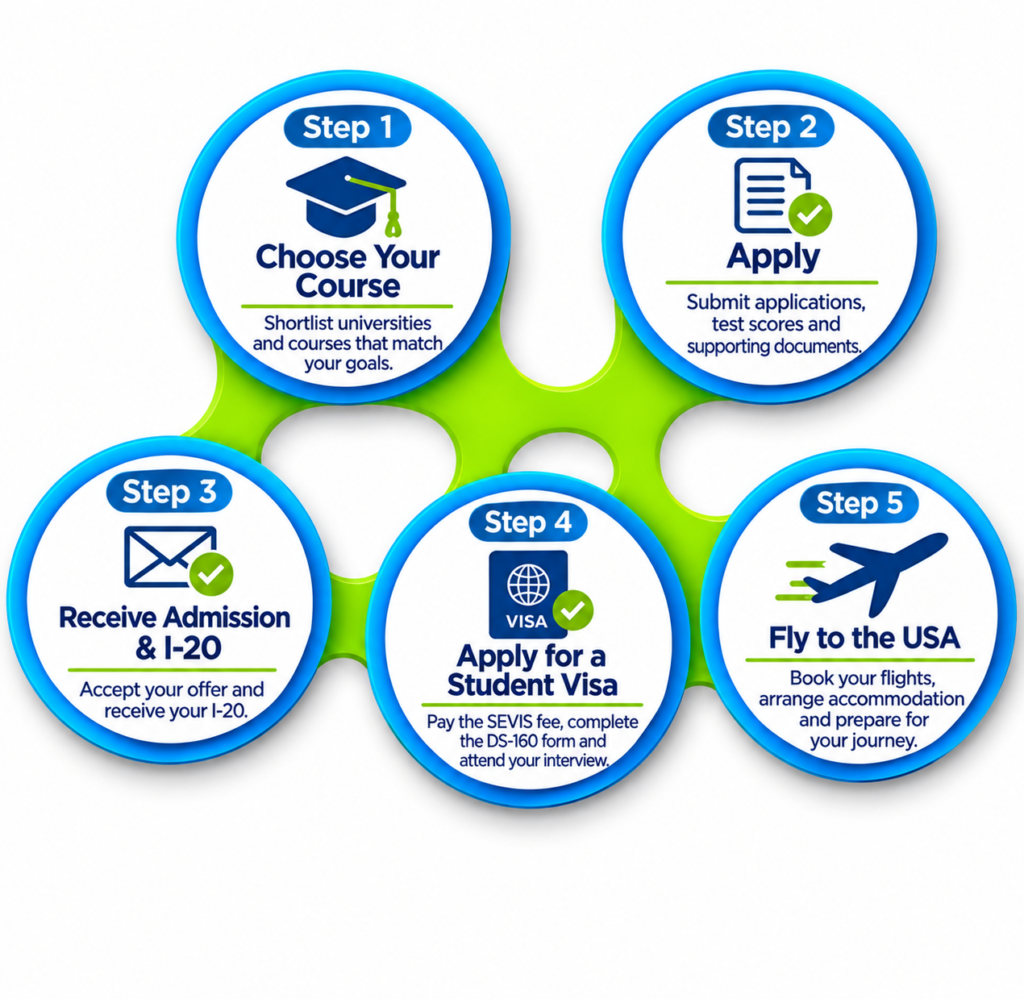
From your shortlist to landing in Ireland, we guide every step.
Step 1: Choose course
Select universities and courses that suit your goals and budget.
Step 2: Apply
Submit applications, scores and documents on time.
Step 3: Offer and fees
Accept your offer and pay the required tuition.
Step 4: Study visa
Show funds, give biometrics and file your D visa.
Step 5: Fly to the USA
Book travel, find housing and register for your IRP.
Master’s tuition usually costs €14,000 to €35,000 a year. Living costs add about €1,000 to €2,000 a month, highest in Dublin.
Show at least €10,000 for living costs per year, plus tuition. You must also pay €6,000 or the full fee upfront.
An acceptance letter, tuition payment, proof of funds, medical insurance, English scores, biometrics and a valid passport.
A post-study permission for graduates to stay and work full time while seeking a job: 1 year for Level 8 and 2 years for Level 9 degrees.
Yes. Stamp 2 students can work 20 hours a week in term and 40 hours a week in set holiday periods.
For tech, data and pharma careers, yes. You finish in a year and can stay up to 2 years on Stamp 1G.
Most master’s courses accept applications from November 2026 to spring 2027. Popular courses fill early, so apply before February.
Most universities ask for IELTS, PTE, TOEFL or Duolingo. Most master’s programmes need IELTS 6.5 overall
No, most Irish master’s programmes do not need GRE. Some MBA courses may ask for GMAT.
Trinity, UCD, UCC, Galway and DCU are strong picks. Compare modules, placements and fees.
Yes. A qualifying job offer can lead to a Critical Skills or General Employment Permit.
One counsellor handles your shortlist, applications, funds plan, visa file and tech upskilling before you fly.
Choose one with clear fees, real university links and honest advice. Avoid anyone guaranteeing a visa.

Cyber Success, Pune's best IT & Non-IT training institute, is on a mission to provide students with industry-relevant skills. They offer expert-led courses that will help you excel in the tech industry. We offer hands-on training in Software Testing, Java Development, Python, MERN Stack, Data Science, and Data Analytics.