
Ranked universities
0
Annual MS tuition
$
k+
Indian students
0
k+
STEM OPT
1
years
Cyber Success helps Indian students choose UK universities, secure a CAS, win scholarships and clear the Student visa, with one counsellor guiding every step.
Globally Ranked Universities
Imperial, Oxford, Cambridge and UCL sit in the QS 2027 global top 10, and 16 UK universities make the top 100.
One-Year Master’s
Most taught master’s degrees finish in 12 months, saving a full year of fees and living costs.
Graduate Route
Work in the UK without sponsorship after your degree, for 18 months on applications made from January 2027.
Research-Led Teaching
Learn from academics working on live research in AI, finance, engineering and health.
Check the academic, English, test and money rules before you apply.
Academic requirements
English language
Tests and interviews
Financial requirements
UK universities mainly run September and January intakes, with a smaller May intake. September 2027 offers the widest choice, so start preparing now.
Main intake / September Intake
Widest choice of bachelor’s and master’s courses. Most scholarships open for this intake. Apply: October 2026 – March 2027. Classes: September – October
Secondary intake / January Intake
Good option if you miss September. Offered by many universities for master’s. Fewer courses and scholarships. Apply: June – October
Limited intake / Summer Intake
Offered by selected universities. Mostly business and computing master’s. Smaller groups and quicker offers. Apply: December – March
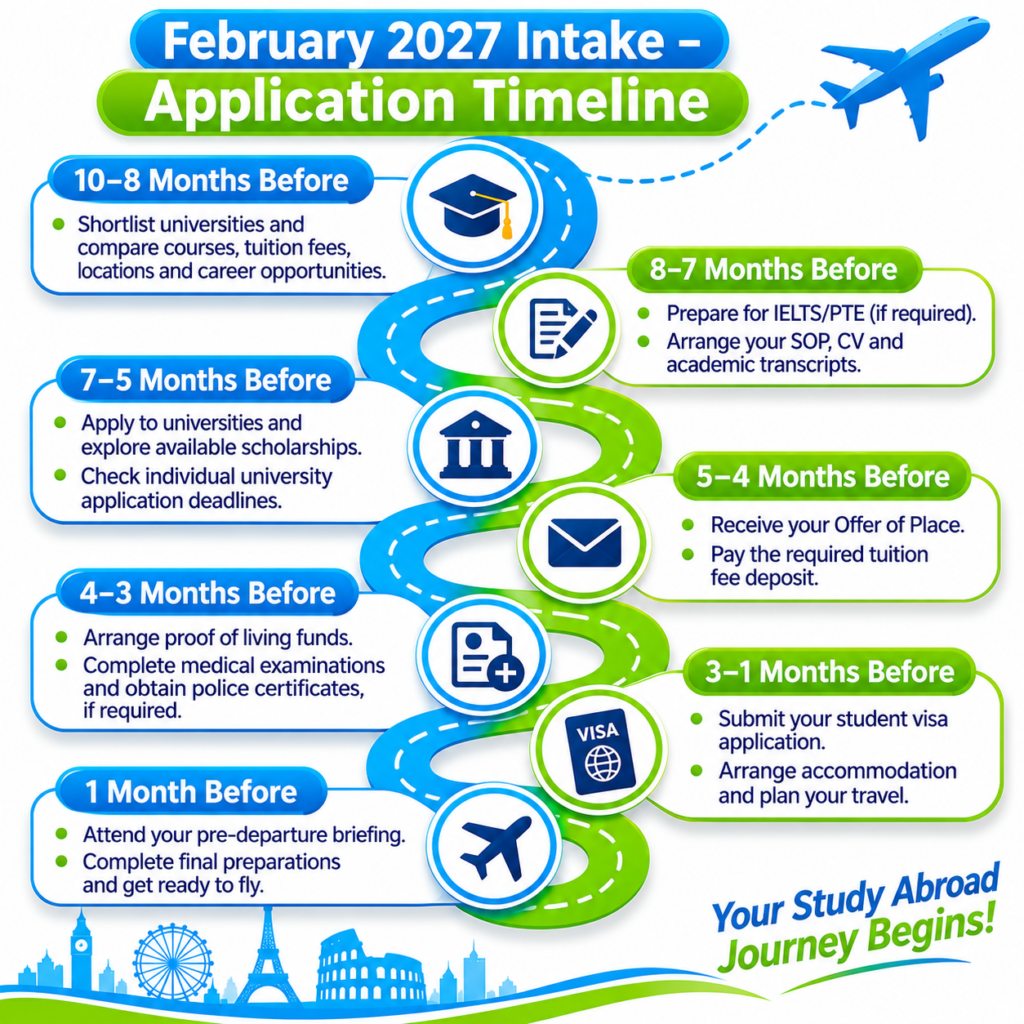
12–10 months before
Shortlist universities. Compare course content, fees, rankings and city costs.
10–8 months before
Take IELTS or PTE. Prepare your SOP and request LORs.
8–6 months before
Apply to universities. Early applications get scholarship priority.
6–4 months before
Receive offers. Accept one and pay the tuition deposit.
4–3 months before
Get your CAS. Arrange funds, TB test and IHS payment
2–1 months before
Apply for your Student visa. Book housing and forex.
1 month before
Fly to the UK. Pre-departure briefing and packing.
Strong picks for all Master Courses.

Popular for AI & Computing
QS World Ranking
Popular for Computer Science
QS World Ranking
Popular for Machine Learning
QS World Ranking

Popular for Data Science & AI
QS World Ranking
Popular for AI & Informatics
QS World Ranking

Popular for Data Science
QS World Ranking
Popular for Computer Science & Engineering
QS World Ranking
Popular for Data Science & Engineering
QS World Ranking
Most chosen by Indian students








Your cost depends on the university, course, city and scholarship. Rent, food, travel and the health surcharge add up.
UK universities offer merit scholarships, early-deposit discounts and partial tuition waivers to Indian students, often worth £2,000 to £10,000.
You can also apply for Chevening, Commonwealth and GREAT Scholarships, and cover the rest with collateral or non-collateral education loans.

Common documents Indian students need when applying to US universities:
The F-1 visa lets you study full time at a SEVP-certified US school. You will typically need:
From your shortlist to your first lecture in the UK, we guide each step.
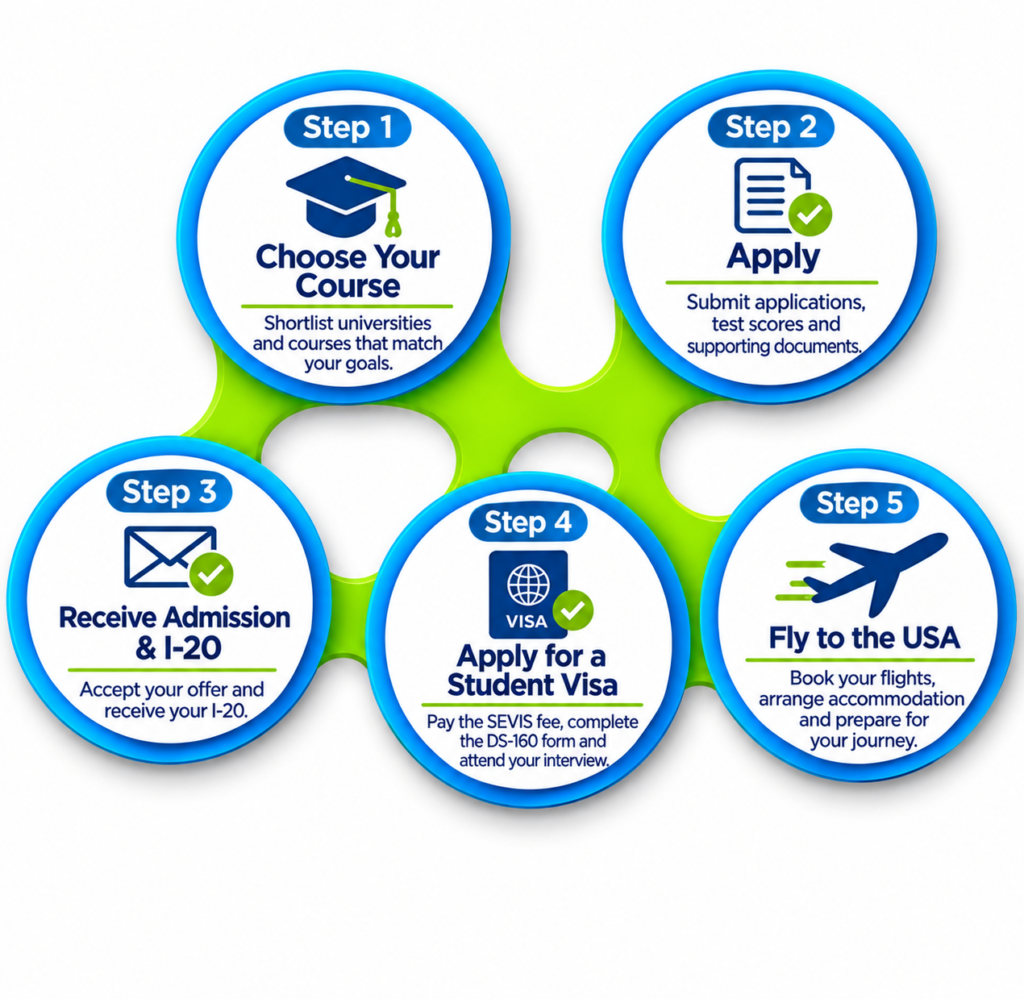
Step 1: Choose course
Pick universities and courses that match your profile and career plans.
Step 2: Apply
Submit applications, English scores and documents before deadlines.
Step 3: Offer and CAS
Accept your offer, pay the deposit and receive your CAS.
Step 4: Student visa
Show funds, give biometrics and prepare for the credibility interview.
Step 5: Fly to the USA
Book flights, confirm housing and join induction week.
Master’s tuition usually costs £16,000 to £45,000 a year. Living costs add about £1,100 to £2,200 a month, with London at the top end.
Yes, for many careers. You finish in one year, study at globally ranked universities and can stay on the Graduate Route to gain UK work experience.
A CAS from a licensed university, proof of funds, English test results, a TB certificate, the IHS payment and a valid passport.
Bachelor’s and master’s graduates applying from 1 January 2027 get 18 months. PhD graduates still get 3 years.
Show unpaid first-year tuition plus £1,529 a month in London or £1,171 elsewhere, for up to 9 months, held for 28 days.
Yes. Degree-level students can work up to 20 hours a week during term and full time during official vacations.
Most master’s courses accept applications from October 2026 to spring 2027. Popular courses fill early, so apply before January for the best chances.
Most universities ask for IELTS, PTE or TOEFL. Some waive it for strong Class XII English scores, but the visa may still need proof.
No, most UK master’s programmes do not ask for the GRE. Some MBA and finance courses may request a GMAT score.
Imperial, Oxford, Cambridge, UCL, Edinburgh, King’s and Manchester are popular picks. Compare modules, fees and scholarships for your profile.
Yes. If an employer sponsors you for a skilled role that meets salary rules, you can move to the Skilled Worker visa.
One counsellor manages your shortlist, applications, CAS, visa file and tech upskilling before you fly
Choose an agent with clear fees, real university partnerships and honest advice. Avoid anyone promising guaranteed admission or a visa.

Cyber Success, Pune's best IT & Non-IT training institute, is on a mission to provide students with industry-relevant skills. They offer expert-led courses that will help you excel in the tech industry. We offer hands-on training in Software Testing, Java Development, Python, MERN Stack, Data Science, and Data Analytics.